

 By Adam Jake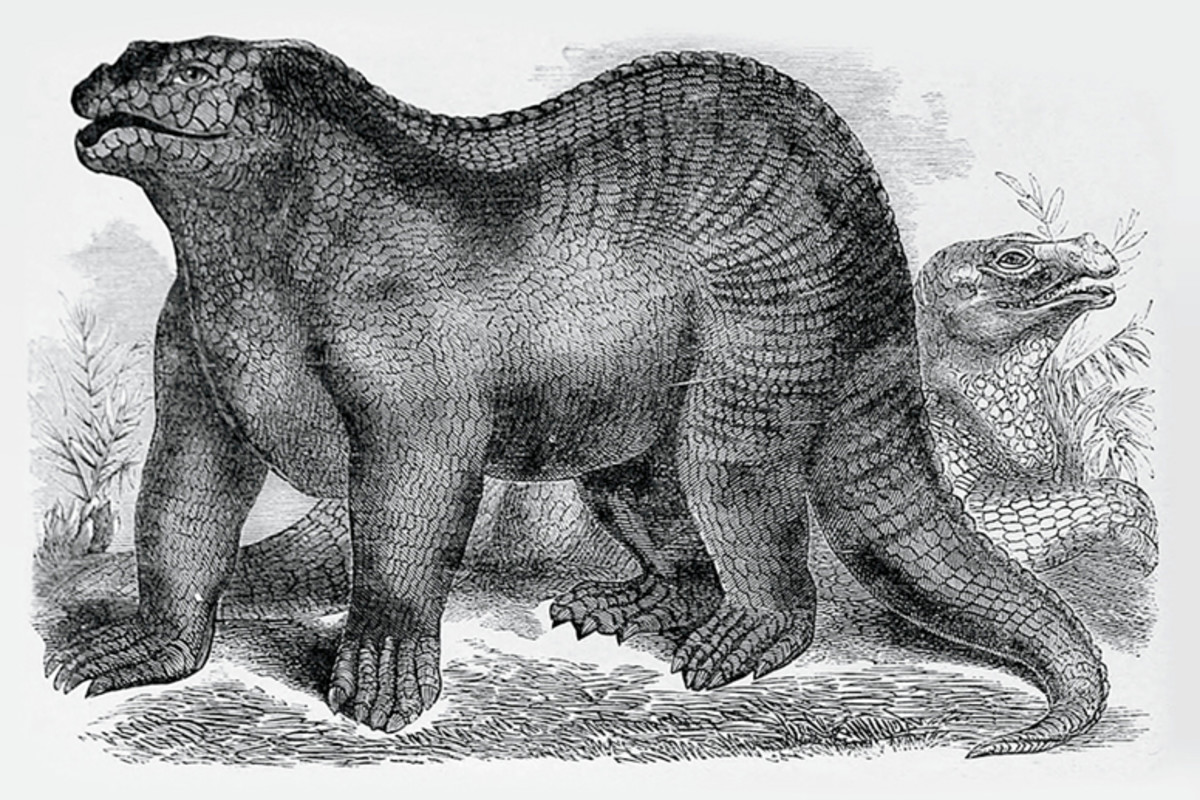
Advent
Long earlier than current paleontology became an awesome scientific discipline, the invention of a few mysterious fossilized teeth helped alternate the way people understood Earth’s historical beyond. These fossils belonged to Iguanodon, one of the first dinosaurs ever scientifically diagnosed.
Dwelling at some degree inside the Early Cretaceous duration, Iguanodon became a massive herbivorous dinosaur that walked throughout prehistoric landscapes greater than 125 million years within the beyond. Its discovery played a primary function within the development of dinosaur generation and helped scientists remember the fact that big reptiles once ruled the planet.
The story of Iguanodon is not truly about an historical animal. It is also a story of clinical discovery, converting theories, fossil evidence, and the gradual development of paleontology. From its unusual thumb spike to its effective jaws, Iguanodon remains one of the maximum important dinosaurs within the facts of technological understanding.
What Changed into Iguanodon?
Iguanodon became a big plant-ingesting dinosaur that belonged to a group of dinosaurs known as ornithopods. Its call approach “iguana tooth,” a reference to the resemblance among its fossilized tooth and people of modern-day iguanas.
However, Iguanodon changed into no longer associated with iguanas. The name changed into given due to the fact early scientists first of all believed the fossil enamel looked similar to the ones of the cutting-edge lizard.
Iguanodon lived at some stage in the Early Cretaceous length, approximately 126 to 122 million years ago, even though the exact dates vary relying at the species and fossil evidence.
It was a big, effective herbivore that might walk on each legs and 4 legs.
The Invention That Modified Paleontology
The tale of Iguanodon began within the early nineteenth century.
In 1822, English medical doctor Gideon Mantell and his spouse, Mary Ann Mantell, became associated with the discovery of unusual fossil teeth in Sussex, England.
The enamel were not like those of any acknowledged living animal. Their form cautioned that they belonged to a massive herbivorous creature.
Before everything, Mantell believed the enamel resembled those of a large historical iguana. This caused the name Iguanodon, meaning “iguana tooth.”
The discovery changed into extraordinarily critical because it provided evidence that massive reptiles had as soon as lived on this planet.
The Beginning of Dinosaur Technological Know-How
Iguanodon became one of the first dinosaurs to obtain a systematic name.
Along different early discoveries, it helped scientists comprehend that prehistoric reptiles represented a distinct institution of animals in contrast to something alive today.
The invention contributed to the improvement of the time period Dinosauria, which became later added by way of British paleontologist Richard Owen in 1842.
On the time, scientists were only starting to understand fossils. The concept that complete groups of massive animals had disappeared from Earth became nonetheless highly new.
Iguanodon therefore played an essential function in converting medical considering Earth’s records.
What Did Iguanodon Look Like?
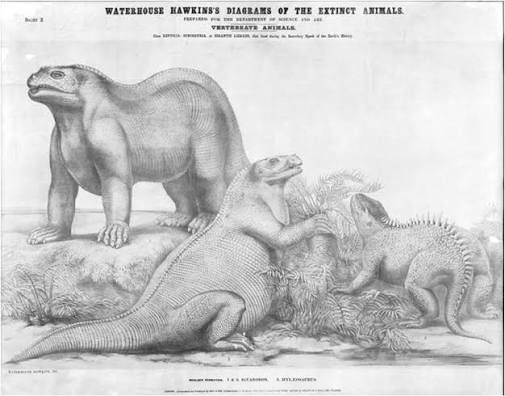
Early reconstructions of Iguanodon were very unique from contemporary interpretations.
For decades, scientists imagined Iguanodon as a big, rhinoceros-like animal with a horn on its nostril.
This misunderstanding happened due to the fact the large thumb spike turned into to start with located at the animal’s nostril.
Later fossil discoveries determined that the spike definitely belonged to the thumb.
Current reconstructions show Iguanodon as a large, muscular herbivore with:
- A protracted tail
- Powerful hind limbs
- Strong forelimbs
- A big body
- A beak-like mouth
- A distinct thumb spike
Its look become a good deal extra uncommon than early scientists to start with imagined.
The Famous Thumb Spike
Considered one of Iguanodon’s most distinct capabilities changed into its sharp thumb spike.
The precise reason of this spike has been debated with the aid of scientists.
Possible features include:
- Defense in opposition to predators
- Fighting among people of the same species
- Display
- Safety of the fingers
In assessment to many different dinosaurs, Iguanodon had a mainly specialized thumb structure.
This feature is one of the reasons the dinosaur remains so recognizable.
How Did Iguanodon Move?
Iguanodon become capable of each bipedal and quadrupedal motion.
This indicates it could:
- Stroll on legs
- Move on all four limbs
Scientists agree with that Iguanodon can also have used extraordinary sorts of motion relying on the state of affairs.
For instance, it could have walked on four legs even as feeding or moving slowly. It can have used its hind legs for quicker movement or to attain better flowers.
This pliability gave Iguanodon a bonus in exceptional environments.
What Did Iguanodon Devour?
Iguanodon became a herbivore.
Its weight loss plan possibly included:
- Leaves
- Ferns
- Shoots
- Seeds
- One-of-a-kind prehistoric plant life
Its teeth had been adapted for processing tough plants.
In contrast to modern reptiles that continuously update individual enamel in one-of-a-kind ways, Iguanodon had specialized dental preparations that helped it grind plant fabric.
The dinosaur’s beak-like mouth additionally helped it bite flowers.
Iguanodon’s Enamel
The enamel of Iguanodon have been a number of the most important fossils in its discovery.
They had ridged surfaces that helped system plant meals.
Because the teeth had been strong and unique, they became precious proof for identifying the dinosaur.
The invention of those enamel hooked up that big herbivorous dinosaurs had developed specialised variations for consuming flora.
Where Did Iguanodon Stay?
Fossils of Iguanodon have been determined in several components of Europe.
Crucial discoveries have been related to regions along with:
- England
- Belgium
- Germany
- Spain
During the Early Cretaceous period, these regions had environments very exclusive from these days.
The landscapes probable covered:
- Forests
- Floodplains
- Rivers
- Open flora areas
Iguanodon lived alongside severa distinctive prehistoric animals.
The Famous Bernissart Fossils
One of the most important Iguanodon discoveries befell in Bernissart, Belgium, at some stage in the overdue 19th century.
Miners located a huge collection of Iguanodon skeletons deep underground.
The discovery became exquisite as it furnished scientists with fairly complete skeletons.
Those fossils helped researchers higher understand:
- The dinosaur’s skeleton
- Its frame structure
- Its limbs
- Its posture
- Its courting to other dinosaurs
The Bernissart fossils have end up a number of the maximum vital Iguanodon specimens ever found.
Why Iguanodon Was So Critical
Iguanodon played a full-size function in early paleontology for numerous motives.
One of the First Named Dinosaurs
Its medical identity helped set up dinosaurs as a awesome group of historical animals.
Endorsed Fossil Research
The invention recommended scientists to search for greater prehistoric animals.
Modified Scientific Questioning
It provided evidence that large extinct reptiles had once existed.
Stepped Forward Know-How of Dinosaur Anatomy
Later fossils helped researchers understand dinosaur skeletons and movement greater correctly.
How Clinical Understanding Changed Over the Years
The story of Iguanodon shows that technology is continuously evolving.
Early scientists made mistakes when reconstructing the dinosaur. The thumb spike became positioned on the nostril, and the animal was given a posture that later proved wrong.
As new fossils were discovered, scientists revised their interpretations.
This method demonstrates how paleontology works:
- Fossils are observed.
- Scientists examine the evidence.
- New discoveries provide additional information.
- Earlier theories are corrected or advanced.
Iguanodon is therefore an extraordinary example of ways clinical understanding develops over time.
Iguanodon in Popular Subculture
Iguanodon has regarded in:
- Museums
- Dinosaur books
- Documentaries
- Instructional packages
- Movies
- Children’s media
As it have become one of the first scientifically identified dinosaurs, it holds a unique place in the history of dinosaur discovery.
Its specific thumb spike and lengthy clinical history make it a famous subject for dinosaur fans.
Thrilling Statistics Approximately Iguanodon
- Its call way “iguana teeth.”
- It was one of the first dinosaurs to be scientifically named.
- It lived throughout the Early Cretaceous period.
- It became a plant-eater.
- It can stroll on two or four legs.
- Its thumb spike was once incorrectly located on its nose.
- Big organizations of Iguanodon fossils had been determined in Belgium.
- Its discovery helped establish cutting-edge paleontology.
The Legacy of Iguanodon
Iguanodon’s greatest significance may not come from its length or appearance however from its position in the history of technology.
Its discovery helped introduce the general public and medical community to the idea that prehistoric Earth become once inhabited by large creatures absolutely one-of-a-kind from contemporary animals.
The dinosaur additionally demonstrated the importance of fossil evidence in reconstructing the beyond.
Nowadays, paleontologists retain to study Iguanodon fossils to examine more about dinosaur evolution, anatomy, conduct, and motion.
Conclusion
Iguanodon turned into more than a huge herbivorous dinosaur from the Early Cretaceous length. It become one of the animals that helped exchange the understanding of paleontology.
From the invention of its unusual tooth to the excavation of entire skeletons in Belgium, Iguanodon’s tale reflects the development of clinical knowledge. Early interpretations had been often wrong, but new discoveries gradually revealed a more correct picture of this terrific dinosaur.
Its powerful body, plant-ingesting manner of existence, unusual thumb spike, and capability to stroll on two or 4 legs make it one of the maximum charming dinosaurs ever found.
Most importantly, Iguanodon helped open the door to the scientific examine of dinosaurs. Its discovery endorsed generations of researchers to discover Earth’s ancient beyond and proved that fossils could monitor terrific testimonies approximately life hundreds of thousands of years ago.
FAQs
What Became Iguanodon?
Iguanodon changed into a big herbivorous dinosaur that lived at some point during the Early Cretaceous duration, approximately 126 to 122 million years in the past.
What Does the Name Iguanodon Suggest?
The call Iguanodon manner “iguana enamel” due to the fact its fossilized tooth have been first of all thought to resemble those of a contemporary iguana.
Who Located Iguanodon?
Gideon Mantell and his wife, Mary Ann Mantell, are intently related to the invention of the fossil teeth that brought about Iguanodon’s identity.
Changed into Iguanodon a Carnivore?
No. Iguanodon became a herbivore that specially ate flowers along with leaves, ferns, shoots, and different prehistoric flowers.
What Was the Thumb Spike Used For?
Scientists believe the thumb spike might also had been used for defense, combating, or display, even though its precise reason remains uncertain.
May Want To Iguanodon Walk on Two Legs?
Yes. Iguanodon become capable of use both bipedal and quadrupedal movement.
Wherein Have Been Iguanodon Fossils Determined?
Essential fossils were found in elements of Europe, together with England, Belgium, Germany, and Spain.
Why Turned into the Bernissart Discovery Critical?
The invention of numerous Iguanodon skeletons in Bernissart, Belgium, furnished scientists with treasured records approximately the dinosaur’s anatomy and structure.
Why Is Iguanodon Crucial to Paleontology?
Iguanodon become one of the first scientifically diagnosed dinosaurs and helped set up the study of dinosaurs as an important area of paleontological studies.
Did Scientists to Start With Reconstruct Iguanodon Efficiently?
No. Early reconstructions incorrectly positioned its thumb spike on its nostril. Later fossil discoveries showed that the spike belonged to the dinosaur’s thumb.
 By Admin